
1
Mapping Youth Worker Pathways
Mapping Youth Worker Pathways
Lisätiedot
Youth workers enter the profession and develop their competencies through many different pathways.
In some countries, youth work is a recognised profession with formal education routes. In others, youth workers learn through volunteering, non-formal education, mentoring, communities of practice, and international mobility experiences.
Understanding these pathways helps us recognise good practices, identify gaps, and strengthen support systems for youth workers at local, national and European levels. It also contributes to the wider goals of quality development, recognition, and professional development promoted by the European Training Strategy (ETS) and the European Youth Work Agenda (EYWA).
Before starting the activity, explore one or more of the following resources.
Listen to five youth workers from different parts of Europe talk about how they became a youth worker.
Source: This video is part of the "A Day in the Life of a Youth Worker" series and was made in the framework of the MOOC on Essentials of Youth Work organised by the EU-Council of Europe youth partnership.
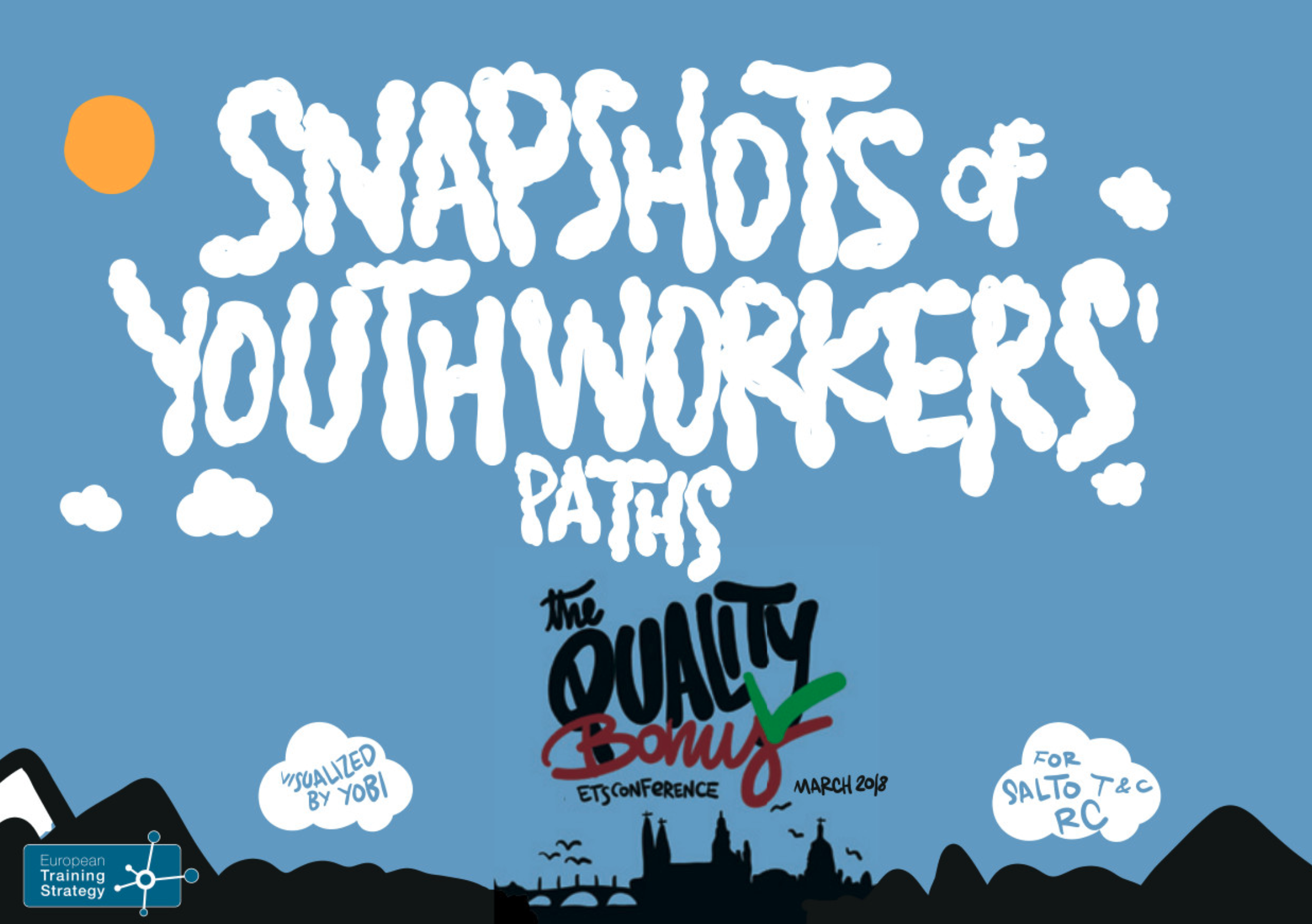
Source: The Quality Bonus - ETS Conference
Other resources:
- Education and Career Paths of Youth Workers in Europe. This European study mapped youth worker education and career pathways across 41 countries and explored how people become youth workers, including formal and non-formal learning opportunities, existing recognition systems, competence frameworks and professionalisation of youth work.
- Youth Worker Education in Europe: Policies, Structures, Practices.This publication explores how youth workers learn, develop, and gain recognition across Europe.
- European Youth Work Agenda and the Bonn Process. Learn how youth worker education, recognition and quality development are connected to wider European youth work development processes.
Step 1: Exploring Pathways to Youth Work
Take part in a walk-and-talk activity outdoors. Change discussion partner after each question. Discuss:
- How do youth workers become youth workers in your country?
- What formats exist for youth workers’ professional development (courses, study visits, mentoring, supervision, communities of practice, peer learning, etc.)?
- Which organisations provide training and support for youth workers?
- How are international training and professional development opportunities connected to national pathways?
- What are the main gaps in current youth worker development pathways?
- Take notes on key insights, interesting practices, and challenges.
Alternative (indoors): Organise a rotating-pair discussion or “speed sharing” exercise in which participants change partners after each question.
Step 2: Compare and Analyse
Work in small groups. Discuss the information gathered during the previous conversations. Reflect on:
- What similarities exist across different countries?
- What differences are particularly interesting?
- Which practices could be transferred into your own context?
- Where are the biggest gaps in youth worker pathways?
- What support structures are missing?
- What actions could strengthen youth worker development and recognition?
Alternative (local group): If all participants come from the same country or locality, use the inspirational resources and European studies above to compare your local reality with pathways and practices identified in other countries.
Go to the badge and submit evidence about your reflection on competencies and individual resources.
The Awero organisation created this educational resource and activity for the Erasmus+ Accreditation training for youth workers.
This activity supports youth workers' competence development in the "Being civically engaged" area. Activity content and badge issuing criteria aligned with the European Training Strategy (ETS) competence model for youth workers to work internationally:
- Self-reflecting on their own identity, values, privilege, power, and power relations, and ways in which they are put into action

Hanki aktiviteetti-merkki
Youth Worker Pathways Hanki tämä merkki
The badge earner explored and compared different pathways through which people become and develop as youth workers. The person reflected on how youth worker education, training, professional development, recognition, and support systems are organised in different countries and contexts. Through dialogue with peers and engagement with European resources, the badge earner identified similarities, differences, gaps, and opportunities for strengthening youth worker pathways.
To earn the badge, the youth worker:
- Explored how youth workers enter and develop within youth work in different countries or contexts.
- Learned from the experiences and perspectives of other youth workers and youth work stakeholders.
- Examined different forms of youth worker learning and professional development, such as training courses, mentoring, supervision, communities of practice, study visits, and international mobility opportunities.
- Reflected on how identity, values, privilege, power, and access to opportunities influence youth worker development pathways.
- Considered actions that could strengthen youth worker recognition, learning opportunities, and professional development.
This activity supports the development of youth workers’ competence in the “Being Civically Engaged” area. The activity content and badge issuing criteria are aligned with the European Training Strategy (ETS) Competence Model for Youth Workers to Work Internationally.
Tehtävät
Tehtävä nro.1
Vastauksen vahvistanut: Yksi aktiviteetin järjestäjä
To get this badge, individually or in a group, explore and compare pathways through which people become and develop as youth workers. Discuss your findings with others and reflect on what helps or hinders access to learning, professional development, and recognition in youth work.
Submit one of the evidence evidence below demonstrating your participation and reflection. This may include:
- Notes from discussions, interviews, or walk-and-talk conversations.
- Photos of group work outputs, pathway maps, posters, or digital collaboration boards.
- A written, audio, or video reflection describing:
- What you learned about youth worker pathways;
- One similarity and one difference you identified;
- One gap or challenge you observed;
- How identity, values, privilege, power, or access to opportunities may influence youth worker pathways;
- One action that could strengthen youth worker development or recognition in your context.
Taidot
#Self-reflecting on their own identity, values, privilege, power, and power relations, and ways in which they are put into action
Järjestäjät
Awero
Cities of Learning Network
Badge issuer recognized with

Badgecraft isännöi tätä alustaa ja kehittää sitä yhdessä johtavien koulutusorganisaatioiden kanssa. Euroopan unionin Erasmus+ -ohjelmasta myönnettiin osarahoitusta tämän foorumin ensimmäisen version rakentamiseen. Ota yhteyttä support@badgecraft.eu.
Alusta
Vaihda toiseen kieleen: