
1
My role in successful youth worker teams
My role in successful youth worker teams
Content
This activity invites you to reflect on your past experiences working in youth worker teams and to explore what makes some teams more successful than others.
Being part of a youth worker team does not automatically mean that the group functions as a team. Even when people bring strong competencies and diverse experiences, a sense of connection, shared direction, and effective collaboration needs to be developed.
By exploring your experiences, you can become more aware of how teams function, what supports collaboration, and what role you play in creating effective teamwork.
By completing this activity, you will be able to:
- Reflect on your experiences of working in youth worker teams and identify what made some of them successful;
- Recognise key factors that contribute to team feeling, flow, and effectiveness.
- Become aware of your own role, values and attitudes, and how these shape your contribution to a team.
- Share and compare perspectives on successful teamwork with other youth workers.
In practice, successful teams often demonstrate a combination of connectedness, coherence, and competence (see more about this in T-Kit 6: Training Essentials, "What makes a team a team?"). They support each other, build on each other's contributions, and work towards shared goals. Reflecting on your own experiences can help you better understand what contributes to a strong team dynamic and how you can actively support it.
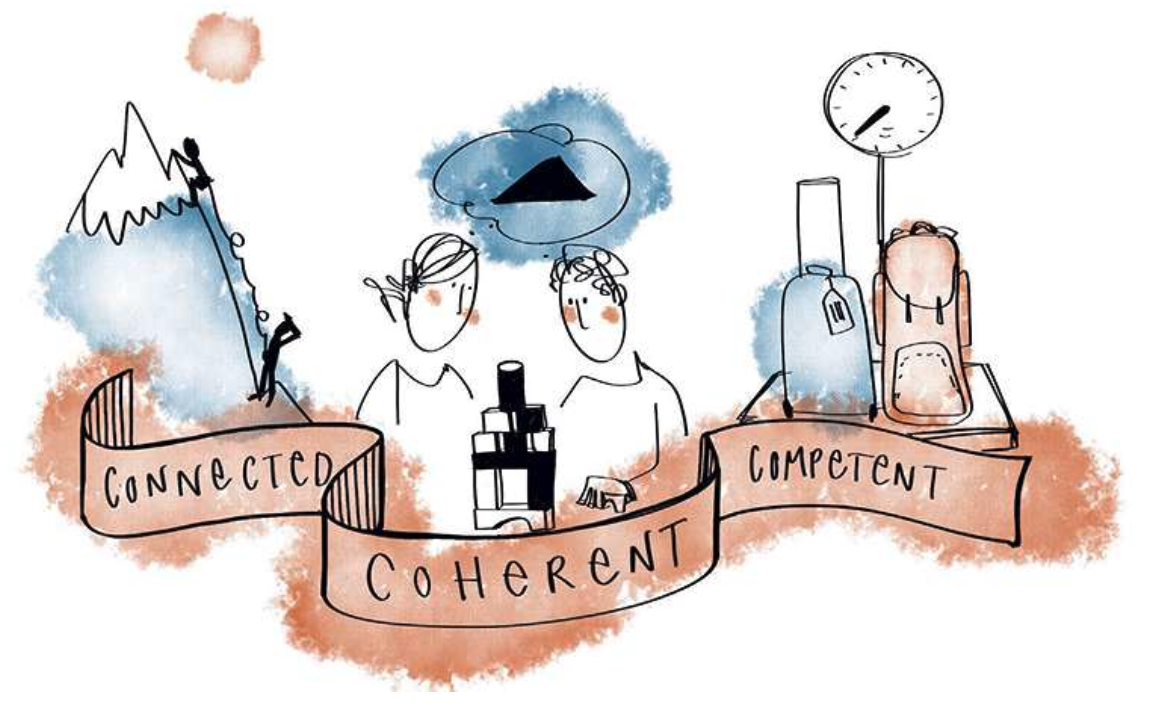
This T-Kit 6 model is a helpful lens for thinking about team success generally. For your badge evidence, though, you'll relate your own reflection specifically to the ETS competence model aspects below — keep them in mind as you work through the steps. This activity connects to two aspects of the ETS "collaborating in teams" competence area:
- Self-reflecting on your own values, beliefs and attitudes;
- The ability to build team spirit and trust.
As you work through the steps below, notice how your experiences relate to these two aspects — you'll need this for your badge evidence.
Step 1
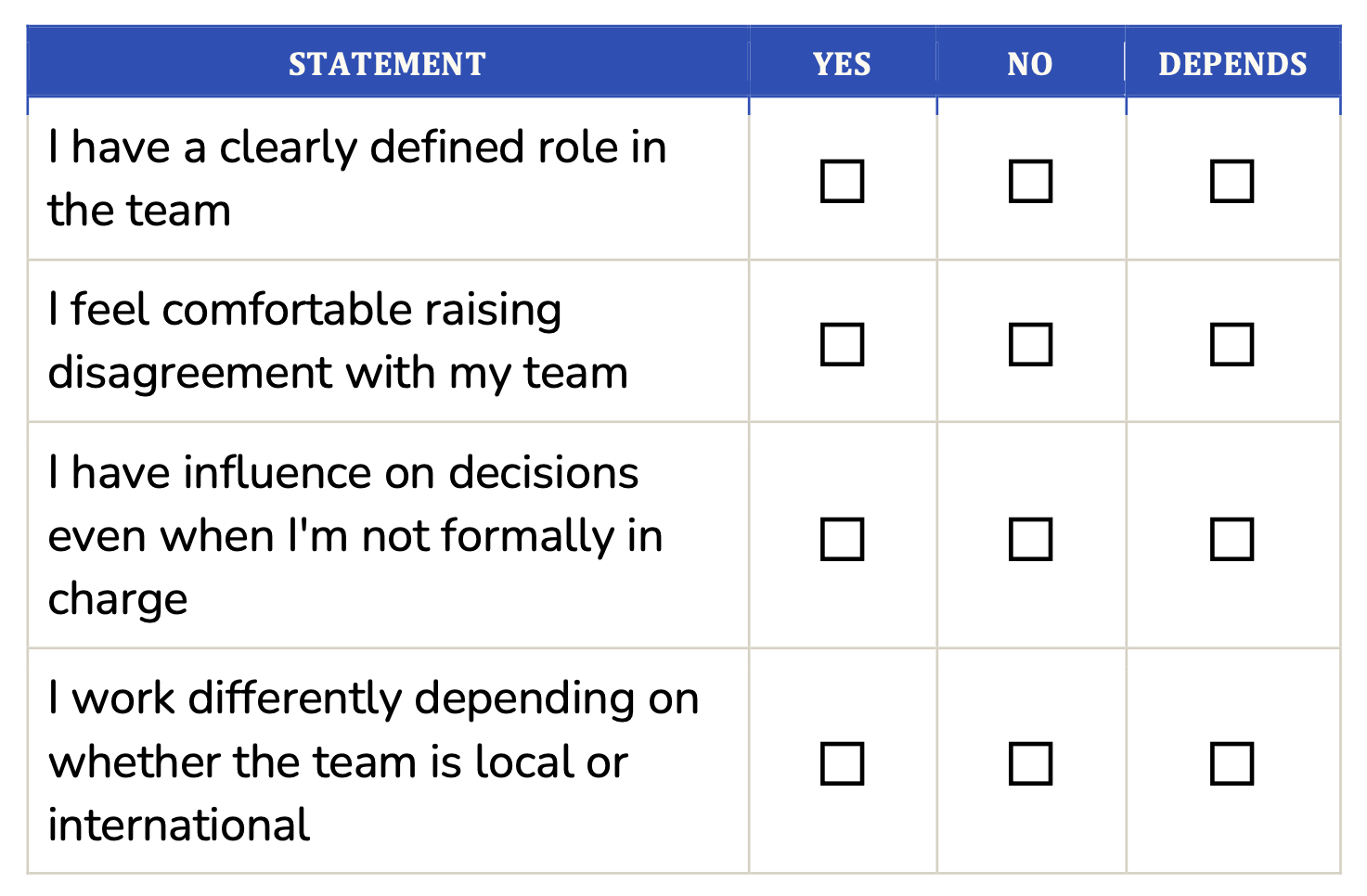
Using the checklist, map your experiences linked to cooperation in (international) teams — mark the statements which suit you when functioning in teams.
Step 2
Continue using the handout, firstly individually reflect on your past experiences of working in youth worker teams. Think about both positive and more challenging situations.
Consider the following questions:
- Have you ever worked in a "dream team"? What made it special? Which factors contributed to the team feeling, flow and success?
- When working in youth worker teams before, could you contribute your personal resources, qualities and competencies to the success of the work?
- What is the basis of successful teamwork for you?
Take notes and identify patterns behind your experiences, not only specific situations but also underlying factors that made a difference.
For your badge evidence, briefly note which of the two ETS aspects above each experience relates to, and how you worked on this reflection — for example independently, through a conversation with a peer or mentor, or as part of this training.
Step 3
Follow the handout to share with the other youth workers what you see as the basis of successful youth worker teamwork — and capture it together on a visual poster.
Reflect together on what these insights mean for how you work in youth worker teams now and in the future.
Submitting your evidence
Go to the badge and submit your evidence. Make sure it includes:
- your reflection on 2–3 teamwork experiences, naming which ETS aspect each relates to;
- a short note on how you worked on this badge;
- an image of your visual poster from Step 3.
The Awero organisation created this educational resource and activity for the Erasmus+ Accreditation training for youth workers.
This activity supports youth workers' competence development in the Collaborating in teams area. Activity content and badge-issuing criteria aligned with the European Training Strategy (ETS) competence model for youth workers working internationally. In particular:
- Self-reflecting on their own values, beliefs and attitudes;
- The ability to build team spirit and trust.

Get activity badge
Successful Youth Worker Team Member Get this badge
The badge earner identified their role, relationships, position in the hierarchy, and experience of local and international collaboration in youth work teams, and described their experiences of successful teamwork — drawn mainly from their professional and/or volunteering practice. Youth workers can earn this badge through independent reflection, a peer or mentoring conversation, or as part of a training session — a training is one possible path to the evidence, not a requirement.
To get this badge, youth workers:
- Identified their role, relationships, position in the team hierarchy, and experience of local and international collaboration in youth work teams, drawing mainly on their professional and/or volunteering practice;
- Related their teamwork experience to at least one aspect of the ETS "collaborating in teams" competence area;
- Identified factors that contribute to team effectiveness, flow and collaboration in local and international youth work settings;
- Presented their conclusions to others — peers, colleagues or a mentor — in a reviewable form.
Activity content and badge issuing criteria aligned with the European Training Strategy (ETS) competence model for youth workers working internationally, in the competence area of collaborating in teams — specifically self-reflecting on their own values, beliefs and attitudes, and the ability to build team spirit and trust.
EQF level: Level 4
Estimated learning effort: 45–60 minutes.
Tasks
Task no.1
Evidence verified by: one activity organiser
To get this badge:
- Map your own role, relationships, hierarchy position, and experience in local or international teams against the ETS competence model. Upload filled in checklist mapping your experiences linked to cooperation in (international) teams.
- Describe 2–3 experiences of working in youth work teams — drawing mainly on your professional and/or volunteering practice — and identify the factors that contributed to successful teamwork in each. Name which aspect of the ETS "collaborating in teams" competence area each experience relates to, and note how you worked on this badge (for example through independent reflection, a peer or mentoring conversation, or as part of a training session).
- Turn your reflections into one clear conclusion about what makes youth work teams effective — for example on a visual poster, in writing, or in another format of your choice — and share it with others (peers, colleagues or a mentor). Upload the result as evidence.
Skills
#Helping build team spirit and trust
#Self-reflecting on their own values, beliefs and attitudes
Organisers
Awero
Cities of Learning Network
Badge issuer recognized with

Awero not-for-profit organisation manages this platform and develops it together with leading educational organisations. The European Union's programme Erasmus+ granted co-funding for building the first version of this platform. Contact support@awero.org.
Platform
Change to another language: